Raphael Chan entered Hong Kong’s construction industry in the mid-1990s convinced that quality building work could improve people’s lives. But he quit more than two decades later, disillusioned by what he called rampant corruption in the industry.
The former senior project manager of a consultancy company said he had witnessed how syndicates, often led by triad-linked masterminds, plotted bid-rigging as early as 10 years in advance, bribed key stakeholders and pocketed up to 50% of the earnings from maintenance contracts.
Related articles


Chan (a pseudonym, used at his request) has also helped the Independent Commission Against Corruption in its investigations into such syndicates.
He shared his experiences during his time in the industry with the Post, after the deadly Wang Fuk Court fire last month, which killed at least 161 people and led to arrests linked to corruption and fraud.
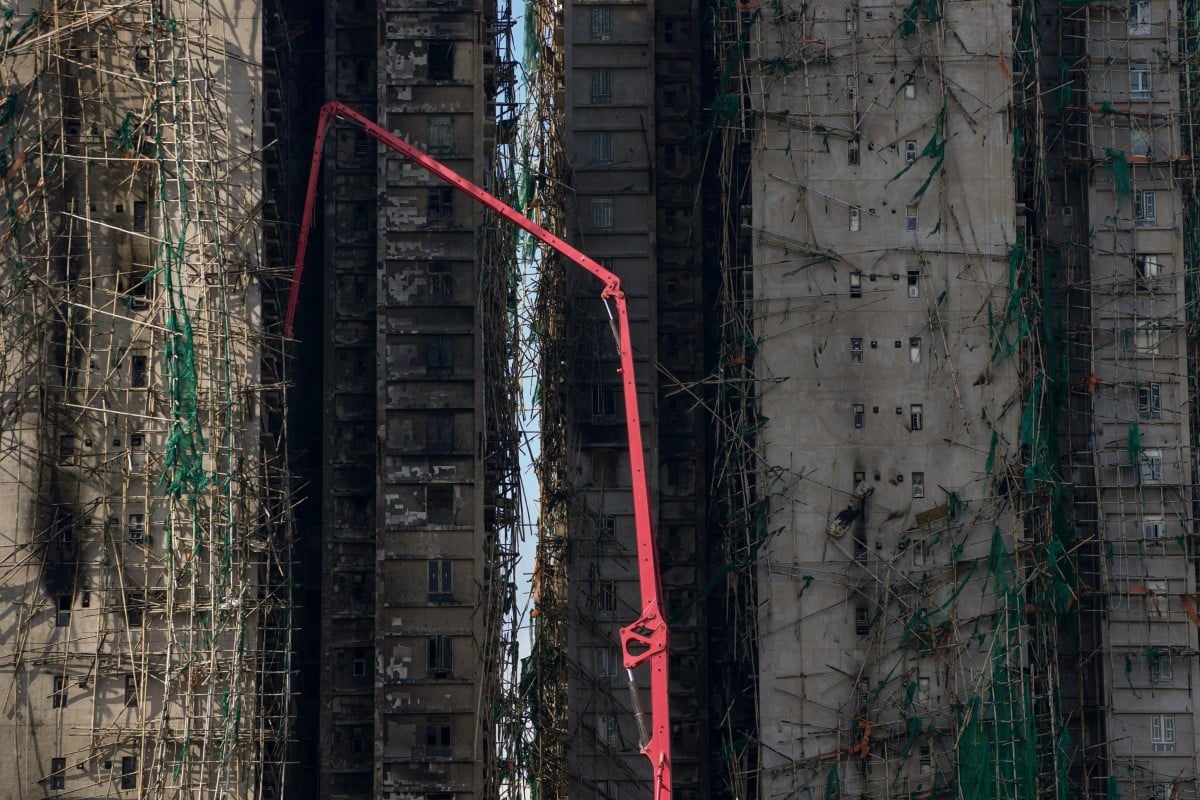
The Tai Po residential estate had been under renovation since July last year and was covered in scaffolding and green mesh. Authorities suspect flammable foam panels used to seal windows and nets that failed fire-retardant tests fuelled the blaze’s rapid spread across seven of its eight blocks.
After graduating from the then Technical Institute — now the Institute of Vocational Education — Chan joined an architectural consultancy as a draftsman.
Over the years, he saw his bosses, colleagues and peers routinely engage in under-the-table dealings.
He finally quit in 2020, when he was earning HK$50,000 (US$6,425) a month as a senior project manager. But he said a peer at the same level could be illegally pocketing as much as 4% of a project’s earnings each season.
Chan said he never took a cent himself.
‘Big tigers’ and triads
He said a criminal racket could be seeded as early as 10 years before an estate was due for major maintenance by “big tigers”, usually triad office bearers whose names never appeared in official records.
To ensure profits, syndicates targeted older private estates with more than four blocks, Chan said. Authorities in Hong Kong select about 600 city properties aged 30 years or more each year, requiring owners to hire professional consultants for inspections and contractors for repairs.
These syndicates controlled a web of companies across the construction sector, including surveying consultancies that acted as the initial point of contact for clients, and contractors, he said.
They particularly targeted estates with many elderly owners, who were easier to persuade into surrendering their voting rights or authorising proxies in the owners’ corporations, according to Chan.
Key positions in owners’ corporations — chairman, secretary and treasurer — were prime targets for buyouts because they had access to confidential documents, including quotation prices, he said, adding that he had once seen a lawyer who served as chairman being bribed.
Sometimes, the people in these positions were already syndicate plants, he said.
Chan said syndicates devoted up to a decade cultivating targets, including buying flats in the estate simply to gain voting rights in owners’ corporations that decided tenders.
He said as much as 50% of a project’s total contract sum went towards bribes and rewards for everyone involved in the bid-rigging, with the “big tigers” taking the largest share.
Chan also witnessed district councillors twice pocketing suspected payoffs for persuading owners of old residential buildings to launch maintenance projects.
Casino chips
He recalled being asked to deliver a brown envelope to the assistant of a district councillor, which he believed had casino chips inside.
“I could feel something circular. They might have been meant for him to take to Macau, cash them in and bring back [the money].”
The big tigers and “paper tigers” — registered companies in the rackets — were far too cunning to get caught, using methods that seemed straight out of a movie, he said.
The syndicates he encountered, including contractors and consultants, held weekly meetings, but always on the mainland, often in saunas where all men went naked to evade surveillance recordings.
Once, at a Shenzhen massage parlour, one mastermind divided year-end bonus stacks with a ruler, deeming a cash-counting machine too conspicuous.
“Mine [share] was 3 centimetres [thick],” Chan recalled. “I just handed it to the boss, saying, ‘I’ve just got this, you handle it’.”
Triad members sometimes loitered near owners’ corporation meetings to intimidate attendees and secure favoured agendas, he added.
‘Systematic operations’
Development minister Bernadette Linn Hon-ho on Saturday highlighted what she described as “systematic operations” of gang-linked syndicates whose members infiltrated targeted housing blocks to become flat owners and facilitate their schemes.
She vowed to crack down on such practices and overhaul the system.
Chiu Yan-loy, known for his years-long campaign against bid-rigging syndicates, said the illicit business had grown significantly over the past 20 years, especially after the 2009 launch of Operation Building Bright, a government‑funded subsidy scheme for essential repairs on old buildings.
The founder of the Property Owners’ Anti Bid-Rigging Alliance, who also worked for a main contractor, said it was hard to eradicate corruption.
“When these people monopolise everything, no matter how you reform, it’s still the same people playing the game,” Chiu said.
But he said it would be helpful if regulators carried out unannounced inspections during the course of a project to check whether the work actually met the approved standards, as it would keep syndicates in check.
The Construction Industry Council said unethical business practices by individual operators must be eradicated but added that such “black sheep” in no way represented industry standards.
The council announced it would conduct a comprehensive review and enhancement of conduct standards, strengthen safety and professional training, and mandate the immediate adoption of relevant systems, such as the use of registered specialist trade contractors for private works.
Originally appeared in South China Morning Post dated on 21 December 2025