Ex-CEO of AsiaWorld-Expo Allen Ha says ‘homegevity’ model of targeted, consistent repairs can spare homeowners major renovation work
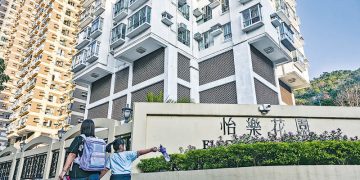
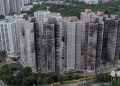
Hong Kong homeowners could adopt technology-led preventive maintenance of older buildings to avoid costly large-scale renovation, with the upmarket Residence Bel-Air serving as a viable example that saved residents more than HK$1 billion (US$127.5 million).
Related articles

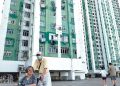
Allen Ha Wing-on, convenor of the Residence Bel-Air owners’ committee, said while the Wang Fuk Court tragedy was a wake-up call to transform the city’s decades-old practice of conducting major renovation works for ageing estates, the private housing sector could deploy technology to lengthen properties’ lifespan.
He called the new concept “homegevity”, saying it would have far-reaching implications for not only for Hong Kong, but for most cities facing rapid urban decay.
“It is a miracle that we made it after three years of hard work to overcome vested interests of various parties including owners of 2,800 residential units,” he told the South China Morning Post on Wednesday.
“It is a science-based, technology-driven, property asset management solution.”
Hong Kong had nearly 25,000 private residential buildings aged 30 or more last year, while the expenditure involved in mandatory renovation on buildings and windows totalled HK$31 billion, according to a recent Legislative Council Secretariat’s research.
Wang Fuk Court, a housing estate in Tai Po that caught fire during a HK$336 million renewal project and resulted in the city’s worst blaze in recent decades, exposed deep flaws in major renovation works for buildings and housing estates. The fire claimed 168 lives, including a firefighter, and displaced nearly 5,000 residents.
A government-appointed independent committee said the fire exposed systemic bid-rigging and anticompetitive conduct in the wider building maintenance market in addition to regulatory loopholes, lax construction practices and contractors cutting corners in the use of substandard materials.
Disheartened by the tragedy, Ha said Hong Kong should brace for a transformation in property asset management and the next generation of housing.
“We intervene with maintenance long before buildings become aged,” he said of Residence Bel-Air, an upmarket estate near Cyberport in Southern district.
“In the end, each household, including me, does not need to pay HK$380,000 for an estate-wide renovation. Some owners even said it was too good to be true.”
In Residence Bel-Air’s case, Ha – former CEO of AsiaWorld-Expo with about 30 years of real estate facility management and a homeowner at the estate – spent three years developing and applying a new maintenance regime until last year.
The intention to create a new regime was triggered in 2022 when its property management company floated a HK$1.05 billion renewal plan from 2033.
In search of alternatives, Ha led a task force and identified technologies such as Internet of Things sensors and big data analysis to gauge the health integrity of infrastructure, allowing the management team to carry out targeted repairs regularly.
“Through this continuous process of repair and maintenance, the life expectancy of parts and assets was extended,” he said.
To secure funding for consistent repair and maintenance, the residential estate taps its existing management fees, which already include a certain percentage earmarked for preventive maintenance.
Chiu Yan-loy, founder of the Property Owners’ Anti Bid-Rigging Alliance, said raising funds for preventive maintenance could be a hurdle for many homeowners.
“They may ask why I need to put in money and I don’t see any cracks in the building yet and suspect whether the management company is colluding with any party for the extra fund,” he said.
“There is little mutual trust between owners and their property management company.”
Vincent Ho Kui-yip, former president of the Hong Kong Institute of Surveyors, said the institute advocated preventive maintenance of properties before buildings aged, and the creation of a database for different life cycles of residential properties in the city in a systematic reform.
He said renovation work could be spread out across different buildings in different stages in a pragmatic manner.
Originally published on South China Morning Post dated at 6 August 2026