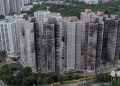
A devastating fire that ripped through a Hong Kong housing estate, killing 161 people, has highlighted abuse in the city’s building renovation industry — a billion-dollar goldmine long plagued by allegations of corruption.
Residents who gazed up helplessly as flames engulfed seven of Wang Fuk Court’s eight apartment towers later heard from Hong Kong’s leader, Chief Executive John Lee, that the Nov. 26 fire had exposed serious problems in the building works industry, including alleged bid-rigging and collusion.
Related articles
Several employees from the consultancy overseeing the roughly HK$300 million ($39 million) renovation of the housing estate and the contractor leading the project were soon arrested on suspicion of manslaughter and corruption. Police and the government’s anti-graft agency have not said that bid-rigging took place.
The tragedy has prompted building experts, activists and apartment residents across Hong Kong to speak out, demanding greater accountability in a lucrative industry that has become a bitter headache for homeowners.
In the past three years, authorities have uncovered at least four sophisticated bid-rigging syndicates involved in more than 70 renovation projects worth HK$2.3 billion.
In a city where almost all of its 7.5 million residents live in high-rise buildings, many Hong Kongers are asking how an industry meant to protect them became so vulnerable to abuse.
The Industry
The hills and mountains that frame the financial hub of Hong Kong leave little room for new development. Instead, the city has been forced to build up, with thousands of high-rise buildings packed tightly together to accommodate its population.
After the deadly collapse of a rundown block, the government in 2012 introduced mandatory inspections for private buildings of at least three stories that have hit the 30-year mark and have other risk factors. Around 600 buildings are issued notices every year.
The law is among the strictest in the world to govern high rises, said Martin Loosemore, a professor of construction management at the University of Technology Sydney, who says other countries rely on self-reporting for repair works.
“It is a good policy designed to do the right thing. But it’s created pressure on a system already vulnerable to corruption,” he added, highlighting that corruption plagues the construction industry globally.
In Hong Kong, homeowners — or the associations that manage their buildings — must hire a professional consultant to carry out the inspection and oversee any necessary repairs. Such work is almost always needed, according to industry experts, and often costs hundreds of millions of Hong Kong dollars.
“This market is a big piece of fatty pork,” said Alfred Tang, president of the Hong Kong Institute of Construction Managers, using a Cantonese saying to describe a lucrative business.
Tang said the illegal practice of bid-rigging — whereby consultants, contractors and middlemen collude on the bidding of renovation contracts for financial gain — has spread across the city since 2012, leaving apartment owners to foot hefty bills.
“The amount of money involved is substantial, which is why bid-rigging syndicates have been able to operate with the organization, power and determination they have for so many years,” Tang said.
He warned that consultants involved in bid-rigging lose their independence in ensuring that safe, quality repair work is carried out.
The Bid-Rigging
Bid-rigging can unfold in several ways, but a common playbook involves consultants overseeing the renovation colluding with building contractors, according to court documents and cases reported by the Independent Commission Against Corruption (ICAC), the city’s anti-graft agency.
In some cases, every party involved in the bidding process can be implicated — including senior members of corporations that represent apartment owners.
A 2015 court case which resulted in Hong Kong’s first bid-rigging conviction shed light on the practice.
Court documents describe how a consultant, contractor and a member of a homeowners’ committee devised a scheme to distribute contracts at a dinner party in Shenzhen, a city that borders Hong Kong.
Also discussed, was how “shadow companies” would be asked to submit so-called dummy bids — often referred to as “pig quotes” — to create a false sense of competition during the tender process.
A middleman with a background in the building renovation industry who introduced members of the group to one another turned himself in and was later sentenced to 35 months in jail for conspiracy to offer bribes totaling about HK$45 million, the ICAC said of the case.
In an early warning about the safety risks associated with bid-rigging, Judge Josiah Lam noted how a lack of competition and oversight in the industry allowed unscrupulous contractors to “further lower the quality of a project” and to “maximize exorbitant profits.”
Former district councilor and anti-bid-rigging activist Chiu Yan-loy said inflating the cost of a project and then using cheaper materials than originally agreed is a common tactic.
“Contractors tend to quote more complicated work procedures and expensive materials to heighten the estimated cost of the project. But when the construction work has kicked off, they suggest cheaper materials by claiming the quoted materials are out of stock or that they’re having difficulties in transportation.”
In some cases, substandard materials that fail to meet safety standards are used on site, said Chiu, a spokesperson for the Property Owners Anti-Bid Rigging Alliance who has campaigned against the practice for almost two decades.
Tang, who has worked in the building industry for 30 years including as a construction manager, added: “If the consultants who are responsible for monitoring the project’s protocols are involved in bid-rigging, their independence in overseeing the quality of the repairs could be affected.”
The Dangers
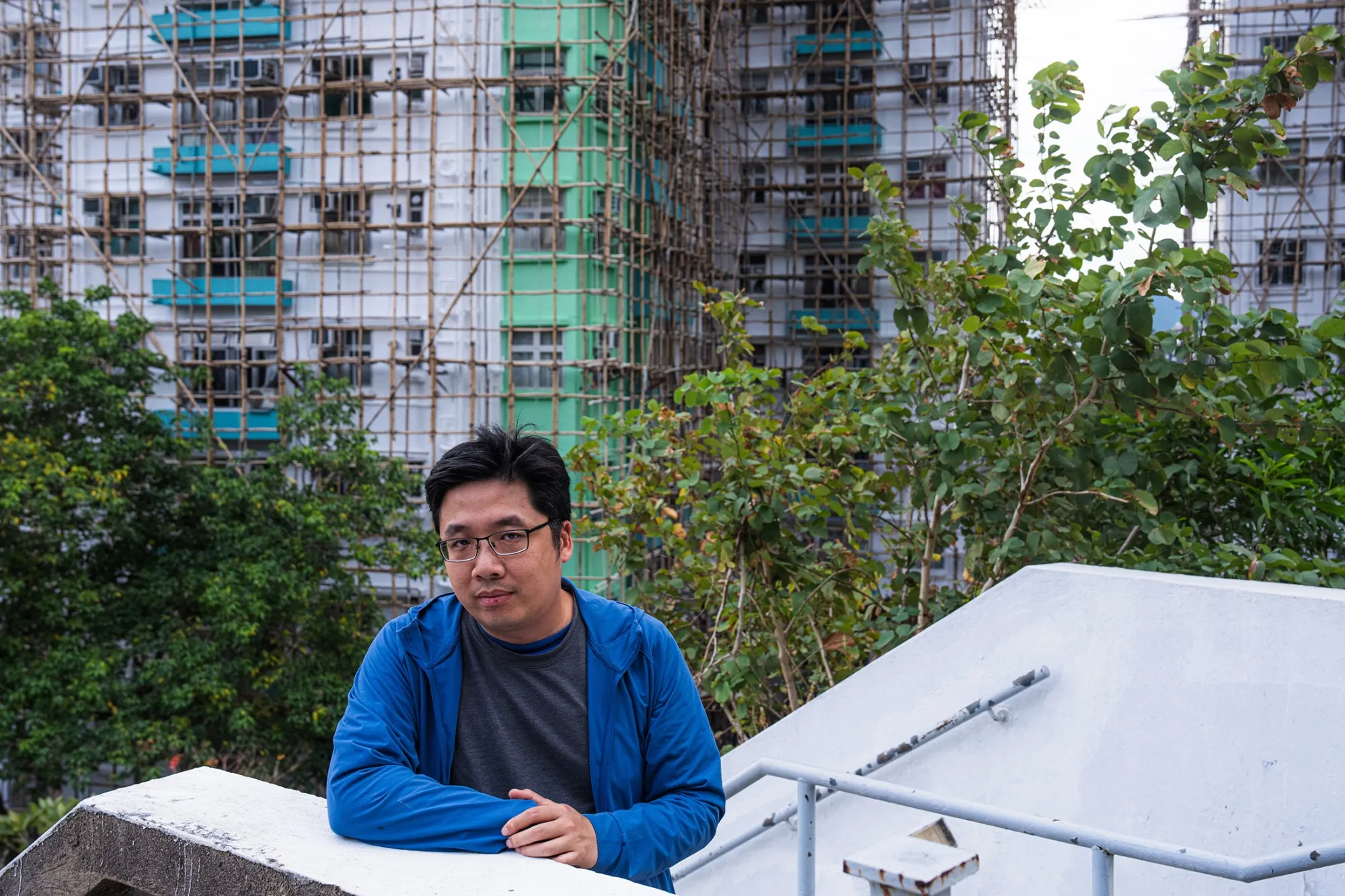
The Wang Fuk Court tragedy has cast a spotlight on the use of cheap, substandard materials on Hong Kong construction sites, after authorities said substandard netting — used as a safety shield for falling construction site debris — and styrofoam boards contributed to the severity of the fire.
Interviews with roughly a dozen residents and homeowners, along with a review of project documents, show that residents had complained as early as 2024 about the renovation work. They appealed to the ICAC to investigate the contractor, attempted to replace the homeowners’ committee that oversaw the bidding process, and raised concerns about the netting in a Facebook post.
None of those arrested in connection with the fire have been convicted.
How Corruption Can Seep Into Building-Repair Projects in Hong Kong
The ways collusion can play out
Similar lime-green netting seen on construction sites across the city was swiftly removed on government orders from more than 200 buildings undergoing major maintenance works. Police told Bloomberg News that they have launched eight investigations into the alleged forgery of safety certificates, required to certify that the netting was flame-retardant.
The Scale
The city’s Competition Commission, which investigates anti-competitive behavior, earlier this year said that “cartel conduct in the building maintenance market is a grave concern for property owners in Hong Kong.”
A review of statements from the ICAC and the commission shows crackdowns since 2023 have dismantled at least four bid-rigging syndicates, which allegedly bribed their way into securing more than 70 renovation contracts. Dozens of people have been arrested.
Less than three months before the fire, the commission raided the offices of nine contractors in connection with alleged bid-rigging involving 25 projects worth HK$600 million.
In one statement, the commission described two syndicates that “are not only sizable but also have cohesive organizational structures” and have been “operating for some time.”
“During the tendering of the renovation projects, they had allegedly manipulated the tender results by exchanging and coordinating bidding prices, either directly or through intermediaries, while some contractors had submitted cover bids with higher prices,” the commission wrote in September, referring to the practice known as providing “pig quotes.”
The Fight
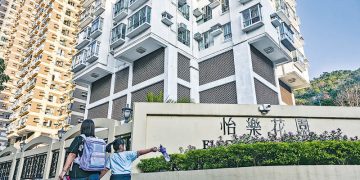
A short distance from the site of the Wang Fuk Court fire, a separate group of residents has gathered every weekend since early 2025 to voice concerns about a HK$371 million maintenance project underway at Sui Wo Court.
The two-year project was supposed to wrap up in December but has not been completed.
“Neighbors, stay awake! We have to fight for what we’re entitled to!” a resident shouted, brandishing a petition to overturn the homeowners’ committee.
Several residents, who asked Bloomberg not to identify them, said they felt shut out of the renovation process and ignored by the homeowners committee.
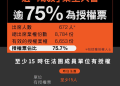
One woman, Kwok, said she received an anonymous thank-you card for allowing someone to vote on her behalf when the contractor was selected, though she said she voted in person.
Pauline Leung Po-ling, chairwoman of the Sui Wo Court homeowners committee, in WhatsApp messages to Bloomberg News denied any wrongdoing and said the ICAC had ruled there was no case to answer.
At Fairview Park, a middle-class development in Hong Kong’s Yuen Long district, homeowners have campaigned against a HK$500 million plan to replace the estate’s underground water pipes.
In September, the property management company said in a letter to homeowners seen by Bloomberg News that it wouldn’t provide a detailed budget breakdown, tender evaluation criteria or the contractor’s identity before the contract for the work was signed.
But, after the Wang Fuk Court fire, the company later agreed to the residents’ demands and halted the project. A spokesperson told Bloomberg News it had “maintained transparency” with homeowners and said residents were asked to make partial payments before a detailed cost breakdown was finalized because the appointment of a contractor was subject to raising the funds.
At least 30 residents marched to Hong Kong’s corruption watchdog to deliver a letter demanding an investigation into whether the project’s decision-making process complied with proper procedural standards.
The ICAC told Bloomberg News it would not comment on specific cases.
The Challenge Ahead
Since the Wang Fuk Court fire, Lee has promised to “implement systemic reform” in the building renovation industry — from construction to supervision — including a review of safety materials, penalties and regulations.
The government has set up an independent committee to investigate the fire and pledged to collaborate with professional organizations such as the Hong Kong Institute of Surveyors to provide advice to homeowners on how to maintain buildings, hire accredited inspectors and protect their rights.
The ICAC told Bloomberg News that to prevent and combat corruption in building maintenance and renovation it is taking a “three-pronged strategy of law enforcement, systemic prevention and community education.”
Jason Poon, chairman of private company CHINAT Engineering and a whistleblower in a 2018 scandal involving substandard work on a metro line, said homeowners are often at a disadvantage because they do not understand the technicalities of contracts and many fear legal threats.
He hopes the Wang Fuk Court fire will bring more accountability to all actors involved in major repair projects.
“It’s no longer just about one estate, it’s about whether the entire building-maintenance system has been compromised.”
Originally appeared in Bloomberg News dated on 30 December 2025
https://www.bloomberg.com/news/features/2025-12-30/hong-kong-fire-reveals-corruption-in-city-s-renovation-industry