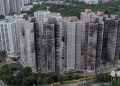
More than a year before a massive fire tore through Wang Fuk Court, an eight-block housing estate in Tai Po, residents started seeing red flags about the renovation project.
They shared tender documents and conviction records on Facebook groups, pointing to what they believed was a complex web of corruption and greed. They complained to the Labour Department and the Independent Commission Against Corruption (ICAC), to no avail.
Related articles
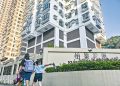

The blaze in late November, which killed at least 161 people, not only highlighted gaps in safety oversight but also laid bare corruption and bid-rigging in Hong Kong’s building renovation industry.
In the aftermath, Chief Executive John Lee established an independent committee to probe the cause of the fire and other issues, including potential bid-rigging and corruption.
Prestige Construction & Engineering Company, the maintenance contractor at Wang Fuk Court, and Will Power Architects, the consultant overseeing the project, are now under investigation by the ICAC.
Executives and staff from both companies, as well as the current and former chairs of the Wang Fuk Court owners’ committee, are among more than a dozen people arrested for alleged graft in connection with the fire. The anti-graft agency’s investigations are ongoing.
Activist Chiu Yan-loy, who has helped residents scrutinise maintenance works and identify anti-competitive bidding practices for almost two decades, said that before the Tai Po fire, many Hongkongers were not familiar with how pervasive bid-rigging was in the city.
HKFP sat down with Chiu, a member of the Property Owners Anti-Bid Rigging Alliance, as he explained collusive tendering, common fraudulent tactics, limitations in government oversight, and how corruption in the building maintenance industry could lead to corner-cutting and safety risks.
Consultant ‘sets the rules’
Bid-rigging, also known as collusive tendering, is an illegal and anti-competitive practice used by construction consultants and contractors to make “unreasonably high profits,” said Chiu.
The fraudulent scheme usually begins with the consultant, who is tasked with drafting tender documents and nominating contractors, and therefore has “oversight” over the entire project. In other words, they “set the rules” in a rigged bid.
To secure a foothold in a project, the consultant offers a low price for their services. In the case of Wang Fuk Court, Will Power was chosen to oversee the project after offering a HK$308,000 consultancy fee, according to Yahoo News.
Analysts said it was a fraction of the market rate.
The consultant then nominates “friendly” contractors to submit tender bids and secure work contracts, subject to a vote by homeowners who are none the wiser. Consultants “are professionals, but those in the owners’ corporations aren’t, and neither are ordinary homeowners,” Chiu said.
The consultant would then take control of the project, from drafting the tender documents to choosing construction companies to bid.
The owners’ corporation committee and the consultant should scrutinise the work, but when both entities become complicit, “the entire oversight system collapses,” Chiu said.
Mandatory inspection and repairs
Under the Mandatory Building Inspection Scheme (MBIS), implemented in 2012, a total of 600 private buildings aged 30 years or above are selected every year, on a risk basis, for mandatory checks and repairs.
Tommy Leung, associate professor in the Department of Economics at Wake Forest University in the US, wrote in a column for the Hong Kong Economic Journal in November – days after the fire – that the government’s MBIS had a part to play in the tragedy.
The scheme, which stipulates that owners must complete inspections and repairs within a stipulated timeframe, “substantially diminished owners’ bargaining power” over maintenance projects, “thereby creating fertile ground for collusion and bid-rigging,” Leung wrote.
He said that under an inspection mandate, owners may feel pressured to accept proposals put forward by consultants, owners’ boards, and contractors dominating the building maintenance industry.
However, Chiu pointed out that the deadlines for mandatory inspection and maintenance works could be postponed for months, if not years, as long as the owners’ corporation could show that it was in the process of complying with the order.
Wang Fuk Court, built in 1983, received an order to inspect and undergo necessary maintenance works in 2016. It was not until 2019 that the homeowners chose Will Power to carry out the checks.
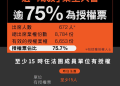
In January 2024, a total of 595 Wang Fuk Court homeowners and authorised representatives attended a meeting to vote on the renovation plan.
They picked the most extensive – and most expensive – plan and chose Prestige as the contractor. By then, the renovation cost had ballooned to HK$330 million, up from an initial HK$152 million estimate.
According to an owners’ corporation document, the most expensive option for the Wang Fuk Court maintenance project would fully repair the estate’s exterior walls and guarantee no leakages for 10 years.
Collusion and proxies
When the bidding process is rigged, the terms of the tender exercise may be controlled to ensure a predetermined contractor will be chosen for the project, Chiu said.
Consultants may tailor the scoring criteria to fit the profile of a certain contractor they hope will win the bid.
There was suspicion that this was how Prestige received a top rating from Will Power.
The competing contractors that submitted bids also offered identical packages, according to Urban Renewal Authority (URA) documents on the Wang Fuk Court renovation project seen by Chiu.
“If the companies filed their bids independently of each other, the probability of that happening is close to zero. The only reasonable explanation is that the same person handled several applications,” Chiu said in a Facebook post in December.
The “accompanying bids” tactic, where multiple construction firms are deliberately arranged to lose the tender to “escort” a pre-arranged winner, may have been used in the case of Wang Fuk Court, he added. The dummy firms may then receive kickbacks for their role in the rigging scheme.
Corrupt owners’ corporation committees are also able to influence the outcome of meetings by leveraging their influence and manipulating votes to select rigged bids, Chiu said.
Submitting proxy votes is a common and generally legal tactic that owners’ corporations have used to control the voting process, he added. If a community welfare group affiliated with the owners’ corporation board “hands out small bribes in exchange for a voter authorisation letter, I can’t say that’s illegal.”
District Councillor Peggy Wong, a member of the pro-Beijing Democratic Alliance for the Betterment and Progress of Hong Kong (DAB), is facing criticism over her role as an adviser to the previous Wang Fuk Court owners’ corporation board, which chose the maintenance package.
Wong, who reportedly asked residents to authorise her to vote for Will Power on their behalf in 2021, has denied any wrongdoing.
She said the project was overseen by the incumbent owners’ corporation committee, which was elected in September 2024; consultancy firm Will Power; and contractor Prestige, according to local media reports.
Cutting corners
As the consultant depends on the contractor’s profits to receive extra illicit payments, the contractor may cut corners to maximise both parties’ earnings, with the consultant turning a blind eye, Chiu said.
That may have been the case with the non-fire-retardant scaffold netting used at Wang Fuk Court.
Based on preliminary investigations, authorities have blamed non-fire-safe scaffold netting as one of the causes of the rapid spread of the Wang Fuk Court blaze. By using the substandard netting, the construction firm allegedly saved about HK$105,800.
“If cutting corners can increase the contractor’s profits, and in turn increase the consultant’s kickbacks, then there’s no incentive for the consultant to handle things correctly. The consultant may even help the contractor find legal ways to cut corners,” Chiu said.
For instance, the consultant might include terms in the contract calling for Japanese tiles or “equivalent” materials without defining what would be considered comparable.
The contractor might use cheaper and lower-quality materials, while charging the same price for high-quality materials to turn a greater profit, with the consultant allowing the apparent lapse in compliance.
Market monopolised by syndicates
The “Smart Tender” system – introduced by the URA in 2016 following a spate of bid-rigging incidents – is supposed to provide a fairer tendering process and assist homeowners in procuring contractors.
By anonymising the tender procedure, the system is supposed to prevent interference and bolster competition. The URA also arranges for independent third-party advisers to provide technical advice and cost estimates, which gives owners an accurate benchmark and prevents contractors from inflating costs.
The Wang Fuk Court maintenance works were estimated to cost about HK$360 million, according to an independent estimate conducted by the URA. That meant the HK$330 million final price tag accurately reflected the maintenance works at the Tai Po apartment complex.
However, a fundamental flaw of the Smart Tender system is that the authorities cannot control who participates in or withdraws from a tender exercise, “as this is a market-driven process,” Chiu said.
The mechanism cannot stop bid-rigging syndicates from entering the market either. In a market monopolised by syndicates, legitimate companies are discouraged from participating in tender exercises for large-scale maintenance or construction projects, leaving only small tenement buildings for them to work on.
Even if proper contractors successfully bid for a project, they might be forced out by the consultant.
“The consultant will use everything in the playbook. For instance, if you have finished work on a wall, they’ll order you to tear it down for an inspection. In other words, the consultant can mess with the contractor and burn through their funds,” Chiu said.
‘Honour system’
Another limitation is that the industry is expected to operate on an “honour system,” Chiu said.
“Enforcement authorities such as the Buildings Department and the Fire Services Department assume that these companies have professional ethics, and the supervisory role is outsourced to the consultant.”
The activist believed that creating a dedicated piece of legislation to combat bid-rigging would be tricky, as it would involve parties with vested interests.
Before the Wang Fuk Court fire, there had been reports of crackdowns on bid-rigging cases.
In April and August 2024, the Competition Commission and the ICAC conducted two joint operations against syndicates suspected of graft and tender-rigging in 44 building maintenance projects, worth HK$1.18 billion in total.
In August and September this year, the Competition Commission launched two operations targeting alleged bid-rigging syndicates involved in 26 maintenance projects worth a total of HK$640 million.
Chiu called on the government to do more.
“The authorities have the technical and professional capability to conduct random checks,” especially in the case of government-subsidised housing complexes, as taxpayer money would be involved, he said.
“If they carry out inspections, [the syndicates] won’t be as unscrupulous.”
Originally appeared in Hong Kong Free Press dated on 1 January 2026